Most style advice tells you to look outward. Study what works on other people. Follow the influencers. Copy the outfits. Build a capsule wardrobe from someone else’s list of essentials. And it never works because you’re just replicating someone else’s style, not developing your own.
I’ve never seen anything that does the opposite—until now, because I built it.
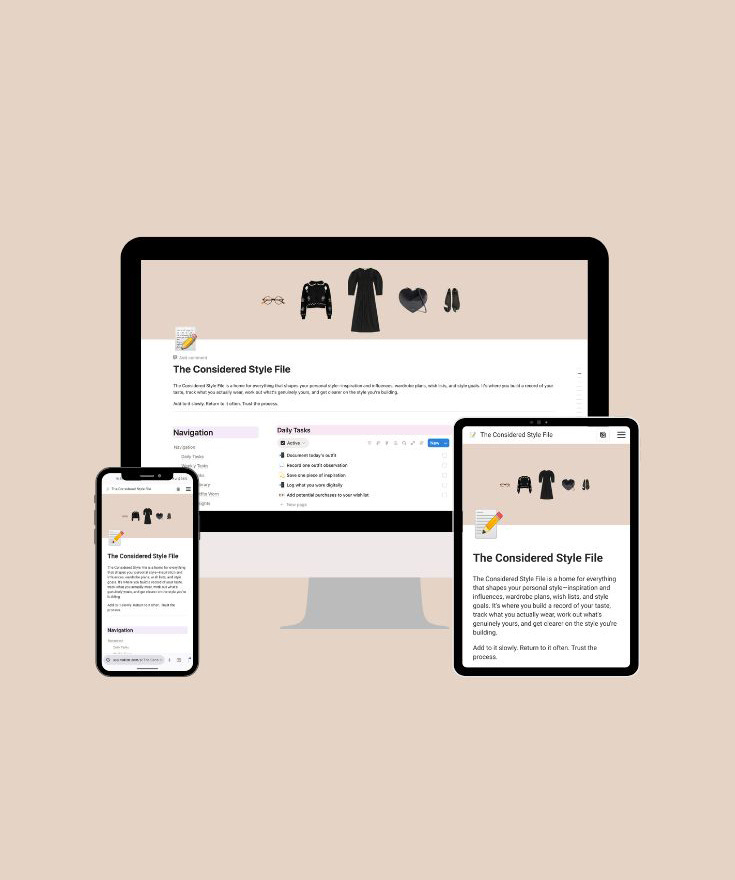
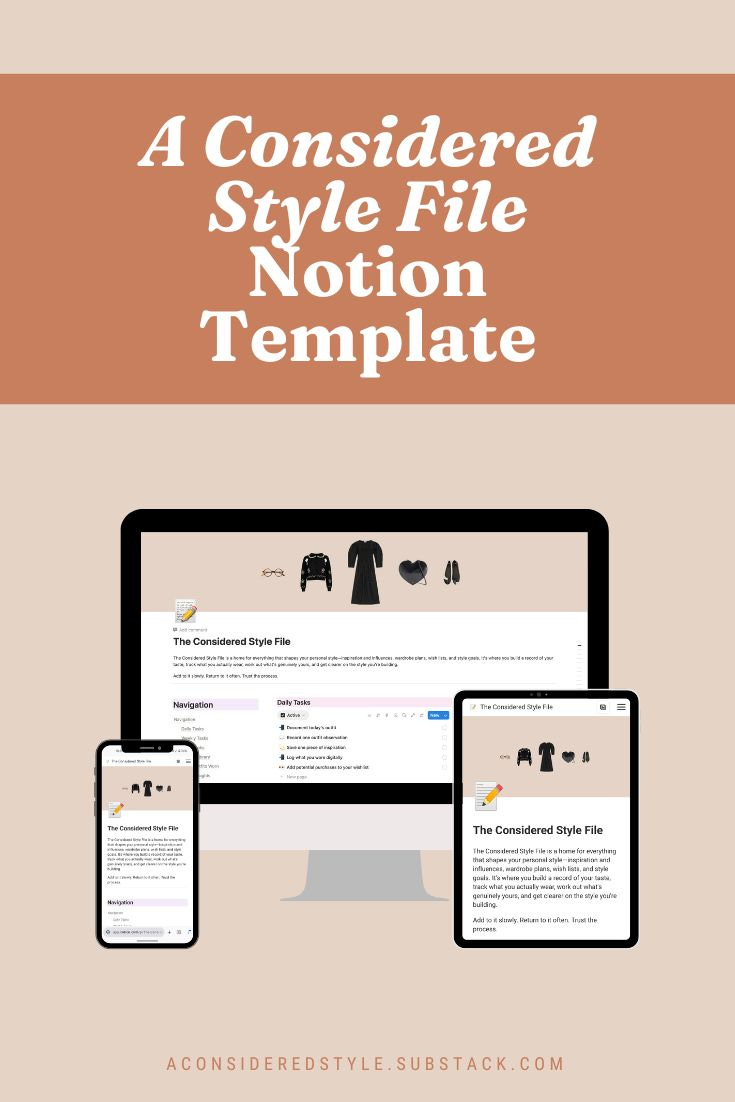
The Considered Style File is a Notion template designed to help you look inward: to build a record of your own taste, track what you actually wear, and get clearer on the style you’re already developing. It’s the tool I couldn’t find anywhere else: a home base for your personal style, built entirely around you.
Add to it slowly. Return to it often. The clearer it gets, the more you’ll trust your own taste.
A Considered Style is about learning to trust your own taste again—in a fashion world that profits from you doubting it.
No ads, no affiliate links, no brand deals.
Why a Notion Template?
Most people try to define their style by shopping for it. They follow trends, copy outfits, buy things that look good on someone else—and end up with a wardrobe that doesn’t quite feel like them.
Personal style doesn’t work like that. It develops through observation: what you’re drawn to, what you actually wear, what keeps showing up in your inspiration and what keeps sitting unworn. The films you love, the music you listen to, the art that moves you. None of it is random.
The Considered Style File gives that process somewhere to live—your influences, your favourite outfits, your wardrobe patterns, your style goals, gathered in one place so you can start to see what your taste actually is, instead of guessing.
What’s Inside
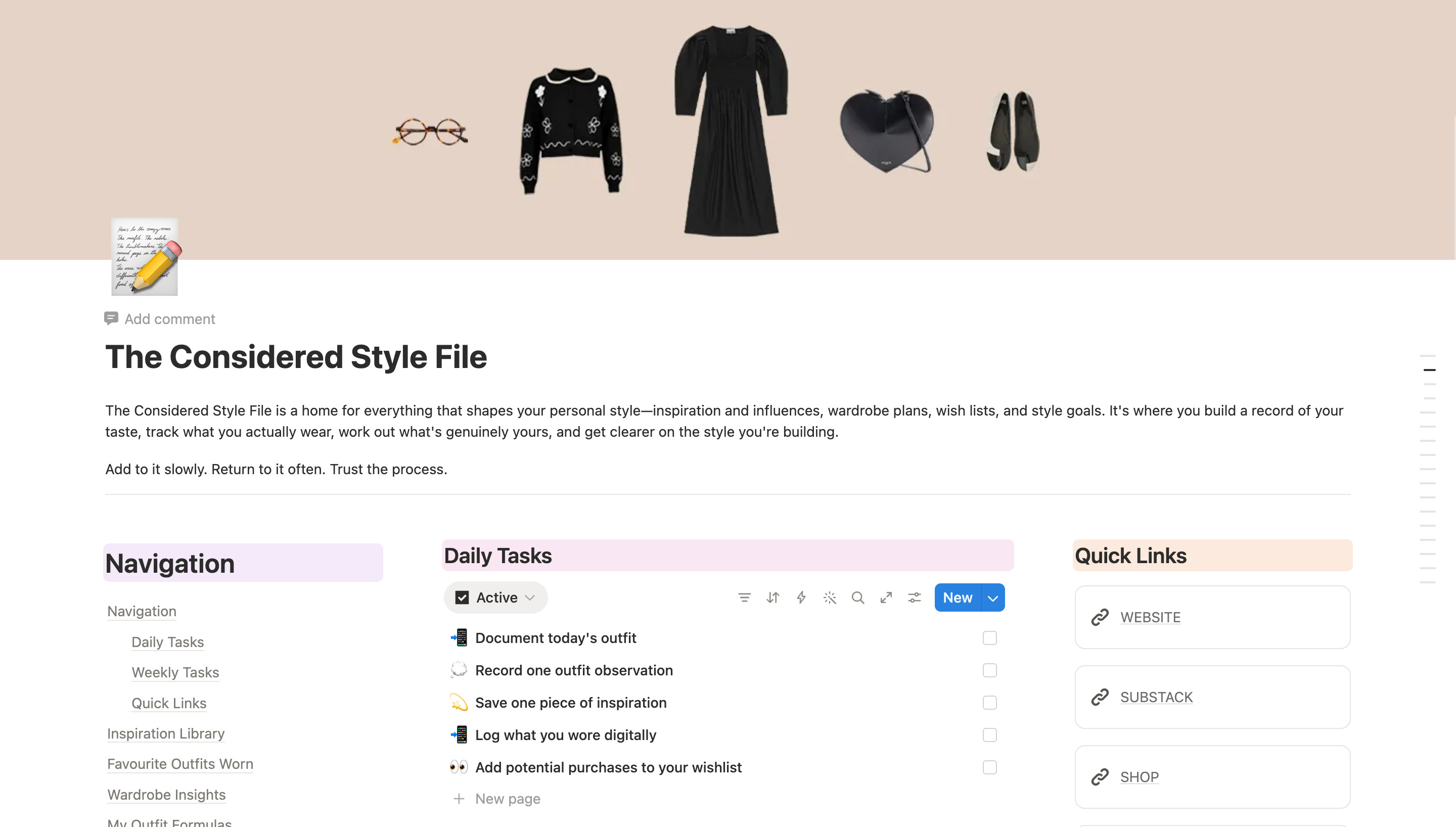
The Considered Style File is divided into sections you can work through and return to at any point—daily, weekly, or once a year when something changes.
Inspiration Library: Anything that stops you and makes you think yes, I love that. Tabs for art, films, books, music, outfits, interiors, photographs, screenshots, and links.
Favourite Outfits: Not aspirational outfits you want to copy. Outfits you’ve actually worn and felt like yourself in—personal proof of what works.
Wardrobe Insights: A running log of what you notice about what you like to wear: colours, silhouettes, patterns, prints. Collect enough of these and the patterns become hard to ignore.
Outfit Formulas: The combinations you always reach for without realising it, written down so you can actually see them.
Wardrobe Favourites, Wildcards, and Neglected Items: The best clothes in your wardrobe, the ones that don’t go with everything, and the clothes that never get worn.
Wardrobe Wishlist: For things your wardrobe genuinely needs, not just things that caught your eye. Add to it slowly. Check it before you buy anything.
Wardrobe To-Do Checklist: Alterations, repairs, things to try on again. Write it down and it gets done.
Personal Style Words: Five categories: aesthetic, feeling, texture, aspiration, and anti-aesthetic. The last one is as useful as the rest.
Personal Style Rules: Your wardrobe rules, built from experience rather than someone else’s advice. Ten prompts to get you started.
Style Goals: Anything you want to try, change, or get better at. No pressure, just somewhere to note what you’re aiming for.
Personal Style Statement: A short statement about your style: what it looks like, what it feels like, what it’s for. Something to come back to when you’ve lost the thread.
Why become a paid member?
Paid membership is for people who want to wear their personality. Essays, guides, and downloads built around one simple idea: personal style isn't something you find. It’s something you develop—slowly, deliberately, on your own terms.